Products
Software for reproducible computational biology.
Scilytica develops software where recurring analytical work benefits from reusable, tested implementations. Current development is grounded in single-cell and spatial analysis.
Scilytica Toolkit
Python tools for reproducible biological analysis.
A Python toolkit emerging from Scilytica’s analytical work, beginning with reproducible single-cell and spatial analysis.
- Platform-aware ingestion for imaging-based spatial data, including 10x Genomics Xenium In Situ output bundles and Bruker CosMx SMI/AtoMx outputs
- Assay-aware preprocessing
- Frozen-reference mapping with documented provenance
- Controlled method evaluation with machine-readable outputs
The Toolkit is being developed as open-source software and is not yet available for general use. Capabilities and APIs may change as active development continues.
See research and technical notes →Ask about the Toolkit →Scilytica Workbench
Inspect analytical workflows and the evidence behind changes.
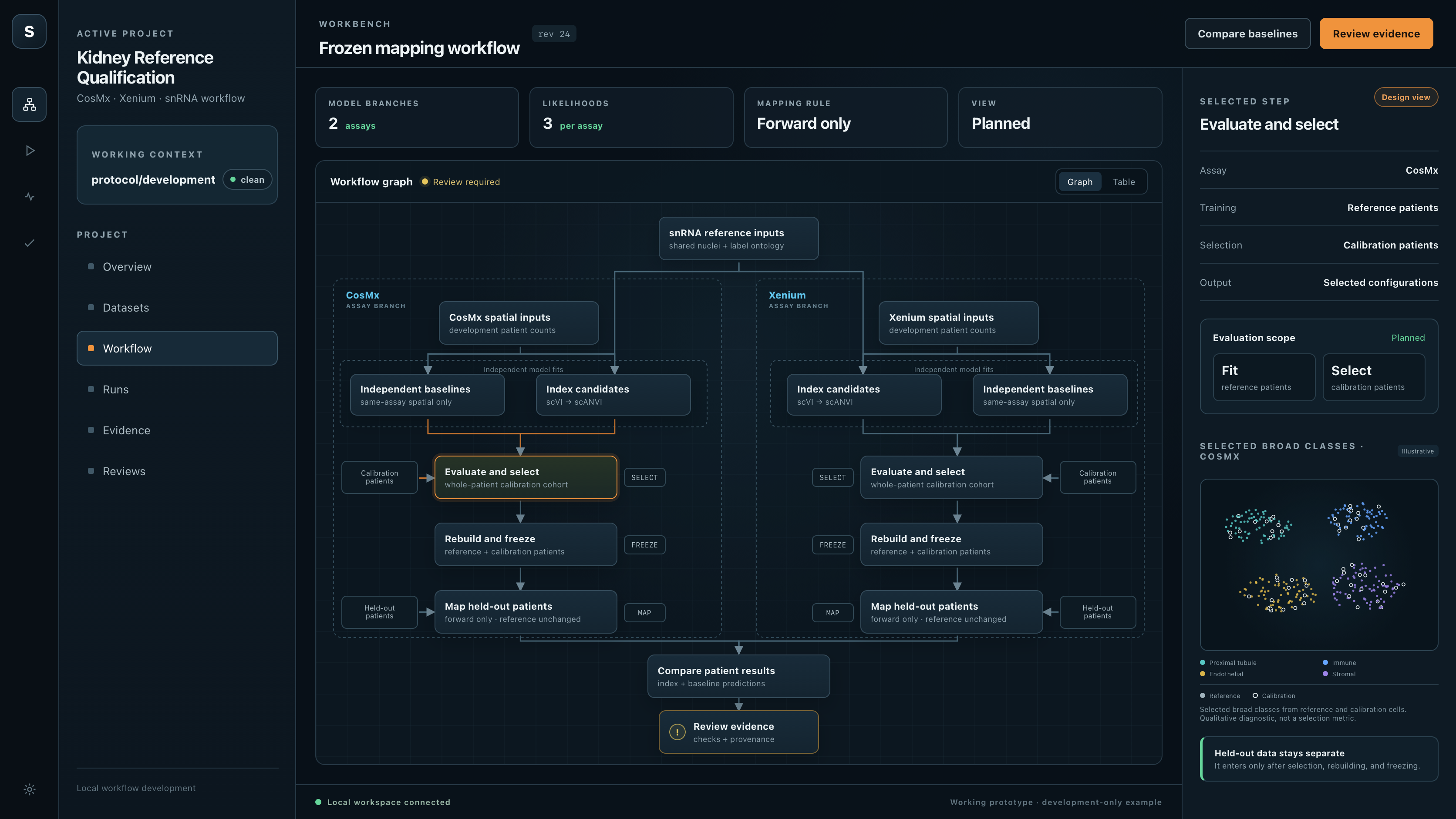
Working prototype. Scilytica Workbench is being developed for computational biology teams that need to inspect how an analysis is defined, changed, and reviewed. It is not available for production use.
The current prototype keeps workflow structure, proposed source changes, and test evidence in one view. Edits can be reviewed alongside their diffs and source-control history. Development currently focuses on Nextflow workflows.
Optional AI assistance can propose edits within a defined scope. Each suggestion remains reviewable before acceptance. You decide when to validate or run a workflow and which changes to accept.
Product direction
What remains in development.
The aim is to help teams compare analytical changes against a baseline, with test results, scientific outputs, and review attached to the revision that produced them.
Cloud execution is planned around AWS and portable containers. Shared projects, administration, formal validation and review, and support for other workflow systems remain intended capabilities.
Design partner program
Help us understand how you evaluate analytical changes.
Scilytica is preparing a design partner program for computational biology teams that develop and review analytical workflows. Early conversations will focus on how methods are assessed, what evidence is needed, and where review or reproducibility becomes difficult.
Your experience will help identify a useful starting point that fits the tools and review practices you already use.
The program is focused on prospective users. Technical and strategic collaborators are also welcome to get in touch.
Request a private previewAnalytical services
Computational biology beyond the software.
Scilytica also provides computational biology and method-development services. Work can use established open-source methods, Scilytica software where appropriate, or study-specific implementations.
Explore services